
Today I kept thinking about a sentence, not an actual painting.
A child at Northview Heights said it this summer while we were making the scenery for their production of The Wiz. She pointed at a section of a flat — one section, very specifically hers — and said:
“I painted that.”
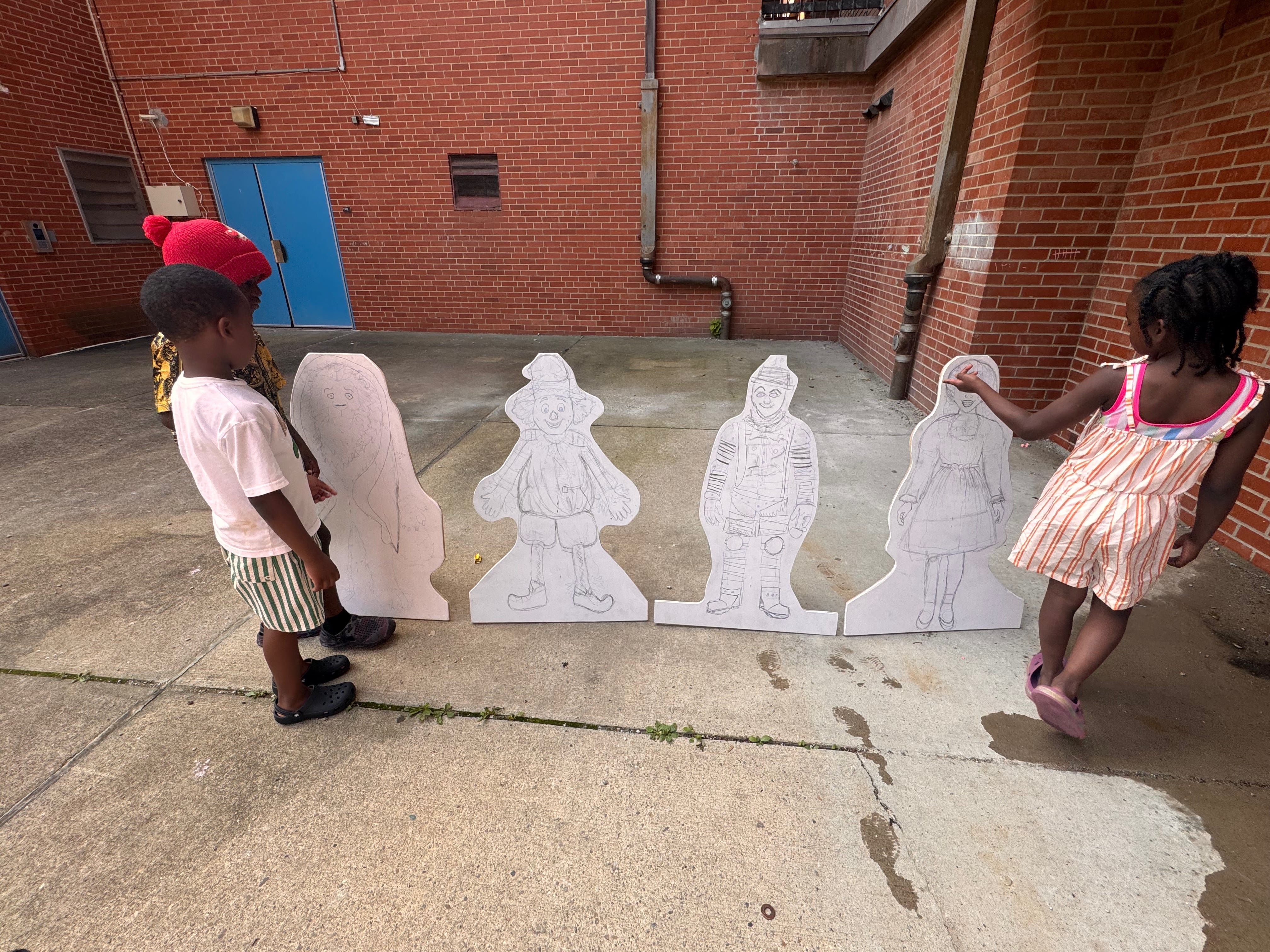
I have been going to Northview Heights on the North Side of Pittsburgh for a summers now. The first time, I brought a mural design of the Pittsburgh skyline and a lot of buckets, and then I handed the paintbrushes to kids between seven and twelve years old, which meant handing over control of my own design. The paint did not land where I imagined it would. Colors overlapped. Somebody made a choice I never would have made.
This summer I came back for the play. Different job. Same thing happened. Somebody stood in front of a piece of scenery and claimed it out loud.
What struck me was not the pride, though there was plenty of that, and she had earned it.
It was the tense.
Painted. Past. Finished. Settled. Said about a piece of scenery that will come down when the run ends, get broken apart, and probably end up in a dumpster in an alley, the way most of what I’ve made in twenty-five years has ended up. She said it like it was permanent. And I think she was right and I was wrong about which part was the permanent part.
The flat is temporary. The sentence isn’t.
Because “I painted that” is not really about paint. It’s about I was here. My hands were part of this. Something exists because I contributed to it. That doesn’t come down with the set.
I spend a lot of time thinking about what remains after something ends. Probably too much. But I keep landing in the same place: the thing that lasts is almost never the thing I thought I was making.
What’s something you made that no longer exists — and what did you keep from making it?