
For a long time, I have carried the quiet suspicion that I am doing my life wrong.
Too many ideas.
Too many directions.
Too many half-built worlds calling my name at the same time.
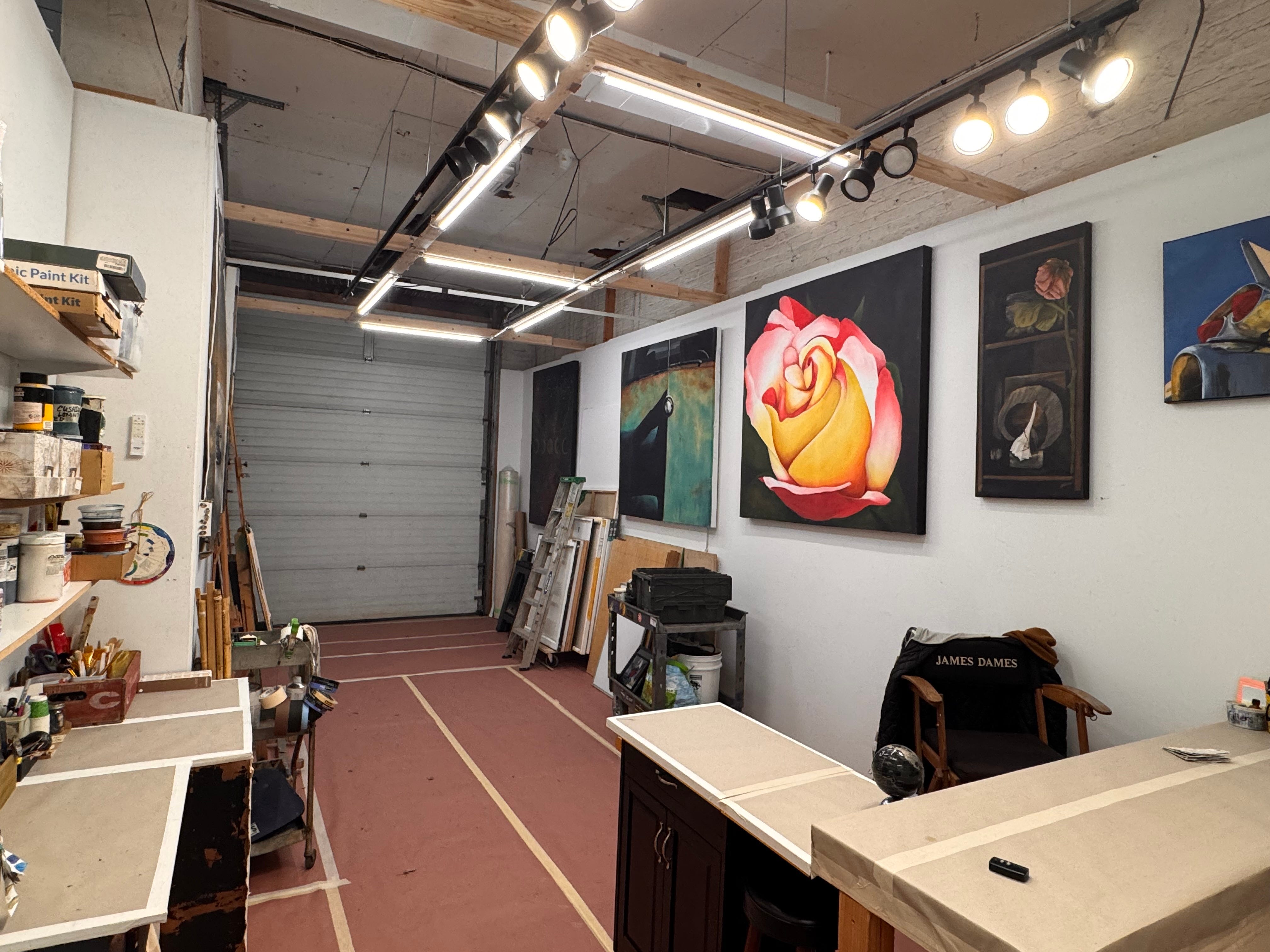
A memoir. A script. A collection of paintings at my studio. A photograph I want to turn into something else. A story that wants to become an essay, or maybe a series of books. A business that is still becoming itself. A room I want to redesign. An archive I want to organize. A body of work I know exists, even when I cannot yet see exactly how all the pieces belong together.
Everywhere I look, the world seems to be handing me the same advice:
Pick one thing.
Focus.
Finish.
Stop getting distracted.
Which is excellent advice when the distraction is scrolling Youtube for three hours or deciding that reorganizing a drawer is suddenly an urgent spiritual priority.
Not that I would know anything about that.
But what if the other projects are not distractions? What if they are part of the way I work?
What if the problem is not that I have too many creative lives moving through me at once?
What if the problem is that I keep expecting myself to behave like a person who only has one?
The Lie of the One Perfect Thing
I recently listened to a talk about an idea called slow-motion multitasking.
Not the frantic kind of multitasking where you are trying to answer an email, make dinner, respond to a text, and pretend you are listening to someone at the same time.
That is not creativity.
That is a nervous system screaming into a paper bag.
Slow-motion multitasking is different.
It is the practice of allowing several meaningful projects to exist at the same time and moving between them over a longer stretch of time. Not because you are incapable of committing, but because sometimes one project opens a door in another.
Sometimes a painting explains a paragraph.
Sometimes a photograph becomes the missing piece of a story.
Sometimes working on the business makes you understand the art.
Sometimes stepping away from the memoir is the only thing that lets you come back and actually see it.
This idea landed somewhere deep in me because I have spent years believing the proof of my seriousness would be my ability to cut away every other interest and force myself down one narrow road. Jolene, pick a thing!
But I have never been a narrow-road person. (Wide Open Spaces by the Dixie Chicks plays in the background).
I have been to 38 countries and all 50 states. I have painted movie worlds, designed spaces, made photographs, written stories, built collections, chased signs, collected fragments, documented grief, documented beauty, documented whatever strange thing was happening just beyond my understanding.
My work has never moved in a straight line.
Neither has my life.
So why have I been demanding that my creative process suddenly march in one?
People have told me I spin a lot of plates. But that has never felt quite right.
To me, it is more like carrying a tray through a cocktail party. Except on the tray is a lazy Susan. I glide through my life with all these little worlds balanced there, and when I set it down, I turn toward the project asking for me that day.
A painting.
A paragraph.
A room.
A memory.
A business idea.
A scrap that makes no sense yet, but feels alive.
I am a person moved by the senses. I listen through texture, color, weather, image, intuition. I do not always decide where the current is moving. Sometimes I just notice where the light is landing and follow it.
I Thought I Was Failing to Focus
There are projects in my life that have been alive for years.
Some of them have changed names. Some have changed form. Some have disappeared for months and then shown back up at the door like, Hello, remember me? I am still very much not finished with you.
My memoir has not only been a book. It has been a film idea. A Substack. A series of paintings. A private archive. A way of understanding what happened to me. A way of looking at who I became because of it.
My art has not only been art. It has been evidence. Souvenirs. Coordinates. Proof that I was somewhere, that I felt something, that I saw the world a certain way and tried to make it visible.
My business has not only been a business. It has been an attempt to create a life where the way I see is not something I have to split off from the way I earn, serve, teach, and live.
None of these things are separate.
That is what I keep missing every time I panic and think, I need to choose.
Choose what?
The painting over the story?
The memoir over the film?
The studio over the business?
The photographs over the spaces?
The life I have lived over the life I am trying to build from it?
Choosing one over the other feels like choosing which child to save in a fire. It is not possible. Because I know they are all speaking to each other.
I am not running five unrelated businesses in my head.
I am building one world in several languages.
The Work Moves Sideways Before It Moves Forward
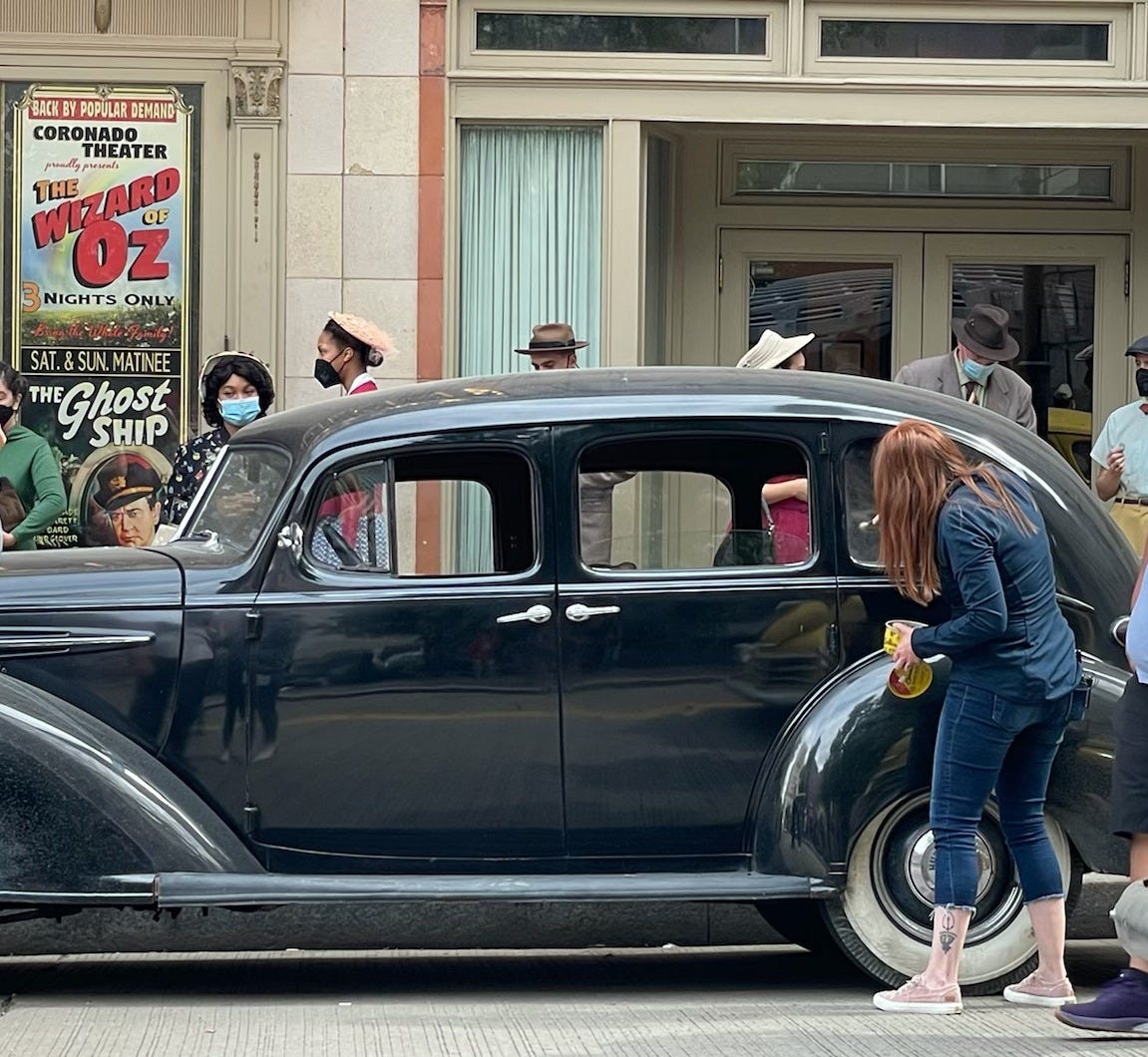
For 25 years, I worked in film and television creating environments that made a story believable.
You learn very quickly in that world that nothing exists alone.
The wall color matters because of the costume.
The furniture matters because of the character.
The light matters because of the mood.
The texture matters because of the camera.
The smallest object in the corner can quietly tell the audience something before a single word is spoken.
A finished scene may look like one thing.
But it is never made from one thing.
Why would a creative life be any different?
Maybe the reason I keep circling between writing, painting, photographs, rooms, stories, and objects is because I am not creating individual pieces.
Maybe I am designing a scene large enough to live inside.
Maybe I am not supposed to amputate the parts of my work that appear unrelated simply because I have not yet stepped far enough back to see the composition.
Creativity does not always arrive as a straight line from idea to completion.
Sometimes it arrives as a constellation.
A little light here. Another one over there. A strange shape forming in the distance. For a long time, all you can see are scattered points.
Until one day, you realize they have been drawing a map the whole time.
The Difference Between Avoiding and Incubating
Now, let me be very clear: there is a difference between having multiple creative projects and using every new idea as an escape hatch from finishing anything.
I know the difference because I have done both.
There is the electric excitement of a new idea, which can be addictive. There is also the uncomfortable moment when the beautiful idea becomes actual work, and suddenly cleaning the refrigerator feels spiritually urgent.
That is avoidance.
But there is another kind of stepping away.
The kind where you have gone as far as you can go today. The kind where the work has stopped opening and started tightening. The kind where you are staring so hard at the problem that all you can see is the problem.
Sometimes leaving one project for another is not abandoning it.
Sometimes it is letting it breathe.
Sometimes the painting needs you to write the story first.
Sometimes the story needs you to get out of the house and photograph something.
Sometimes the business needs you to make the artwork so you remember why you are building the business in the first place.
Sometimes the thing you are calling distraction is actually cross-pollination.
Sometimes it is your creative life composting itself into richer soil.