
Travel was an escape for me. It was how I figured out where I was.
I’ll open my computer with one idea in mind, and then Facebook memories start popping up…
This time last year. (You were working on Mayor of Kingstown and watching the paint freeze on your brush because you were working outside and it was below freezing!)
Ten years ago. (You were on an awesome beach in Isla Mujeres.)
Different places. Different versions of me.
Different spots on the planet.
I wasn’t collecting places. I was trying to locate myself.
And suddenly I have ten more ideas about what I could write about instead.

I’ve always been intrigued by people who go on the same vacation every year. For most of my life, travel meant the opposite to me — seeing something new, stepping into a culture I hadn’t experienced before, letting unfamiliar places stretch me in ways I couldn’t anticipate.
Returning to the same place always felt a little… boring.
BUT Hawaii is the exception.
It’s one of the few places I’ve returned to again and again. I will always go there now because it is where my husband’s ashes were planted as a coconut tree. So now I return—not out of habit, but because part of my life is rooted there.
I remember the first time I saw the ocean there. It was the bluest blue you could imagine. The white-tipped waves crashing on the black lava rocks gave so much contrast. And then there were the black sand beaches, the red sand beaches AND the green sand beaches. You just can’t get that color combo anywhere.


On one of my first return trips, I remember being so excited to smell that air again. I woke up and walked barefoot through the lānai of Aloha Chapel and Go Go Lounge with a cup of coffee, listening to the wind move through the palms. Nothing dramatic happened. I wasn’t thinking about the past or the future. I just noticed how my body softened in a way it rarely does at home.
It started because it meant a lot to my husband. Hawaii mattered to him for reasons I came to understand over time. Then it mattered to us together. And later — after he died — it took on an entirely different meaning for me.
I went back not to recreate the past, but to make new memories of my own. To see parts of the islands I’d never seen before. To experience it as myself — alone — and let it become something different. And also to remember who I was, once.
Looking back now, that feels eerily similar to how I’ve lived my life since his death: not trying to undo what happened, but trying to build something new inside the same body, the same world. Different time stamp.
It also made me rethink the people I used to quietly judge for going to the same place over and over again. Maybe for some people, that place is the only place they feel fully like themselves. Maybe it’s not about adventure or novelty at all, but about having a reference point — somewhere that reminds them who they are before life piles back on.
This week I saw a post on Instagram that stopped me mid-scroll. It said people often change their lives more after travel than after therapy — not because therapy doesn’t work, but because travel creates contrast.
When you travel, the brain can’t rely on autopilot. New streets. New food. New language. New faces. The nervous system is forced into presence. You temporarily step out of your usual roles — employee, partner, caretaker, version-of-yourself-with-history — and you become just a person moving through space.
And sometimes, that’s enough to hear yourself more clearly.
That idea hit me because the first time I ever really “went away,” it wasn’t college. College felt expensive and impossible. I went away to be a summer camp counselor instead. At the time, I didn’t have language for it — but I think I was learning how to trust myself. A coming-of-age experience, if you will, just in a unique way.
Every trip after that opened me differently. Every new place let me meet myself in a new way. What I thought was wanderlust might actually have been a desire for a deeper relationship with myself — and if we really do use the world as a mirror, then that would make sense.
Which brings me to the part that’s harder to sit with. I haven’t gone anywhere in over a year. No big trips. No dramatic departures. Just staying put and noticing what surfaces when there’s nowhere else to project myself. Some days it feels grounding. Other days it feels strangely uncomfortable — like standing still long enough for the noise to catch up.
So now I find myself wondering:
Do we travel to escape — or to orient ourselves?
Do we return to certain places because we’re stuck — or because they hold a version of us we recognize as home?
And if travel helps us recalibrate… what does it mean when we stay still for a while?
I don’t have answers yet.
But I’m paying attention. Well, kind of…
I always have an eye to the sky and ear to the ground. But, yeah, that other eye is free to pay attention.
Before I go any further, I want to be honest about something. Travel doesn’t fix everything. It can be destabilizing. It can crack things open without telling you how to put them back together. Insight without integration can leave you feeling unmoored. I’ve experienced that too.
I don’t believe travel changes people because it’s glamorous or freeing.
I think it changes us because it interrupts the illusion that the life we’re living is the only one possible. And for me, I love breaking through illusions. And, ironically, creating them (ie, working in movies and television).
When you travel, especially alone, identity isn’t needed. The scripts fall away. You solve small problems, get lost, adapt, and survive. Not dramatically — just enough to rebuild trust in yourself.
Every small act becomes a quiet vote of confidence. You navigate a foreign street. You order food without knowing the words. You miss a train and figure it out anyway. And slowly, you start believing in yourself again. You trust yourself. And if you screw up, you learn and adapt to yourself.
You realize you are the one who can figure it out. And you do.
There’s a pattern I can see now. First comes contrast — realizing other ways of living exist. Then comes manageable (sometimes calculated) risk — uncertainty without catastrophe. Somewhere in the middle, identity loosens just enough for authenticity to slip in. And slowly, without fanfare, orientation resets.
You know that saying: if you want to know the truth of a person, watch how they treat the waiter? Travel works the same way. When there’s no routine and no one who knows your story, whatever’s real rises to the surface.
Looking back, I don’t think my need to travel was about distance at all. It was about contrast. About stepping far enough outside my familiar environment to hear what was actually true for me — not what was expected, habitual, or inherited.
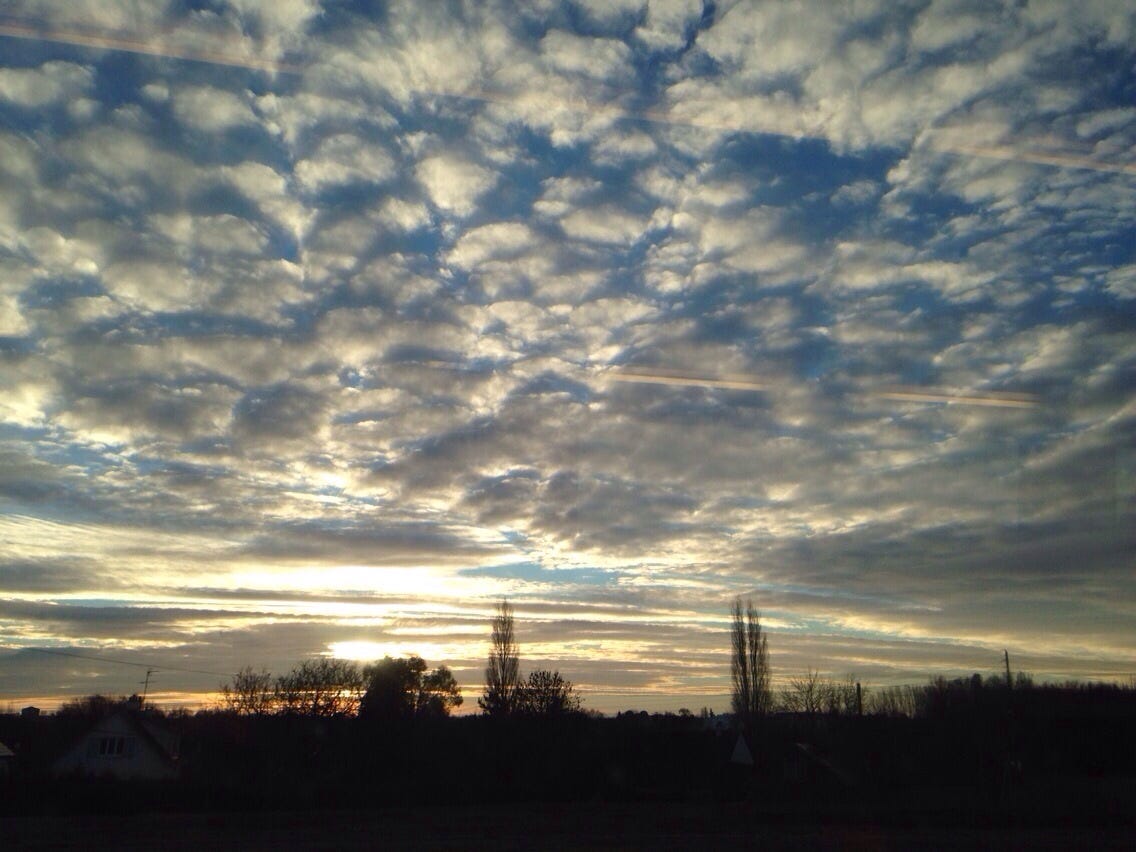
That’s why returning to Hawaii eventually stopped feeling like it was “boring” to go back there and started feeling like anchoring.
Some places don’t exist to transform us. They exist to remind us who we are when the noise drops out.
Hawaii became that for me — not a place to go backward, but a place to reorient forward. A place where grief, memory, and new possibility could coexist without demanding resolution.
So when people say travel is escapism, I no longer agree.
Escape implies avoidance.
Orientation implies agency. I’m all about the agency these days
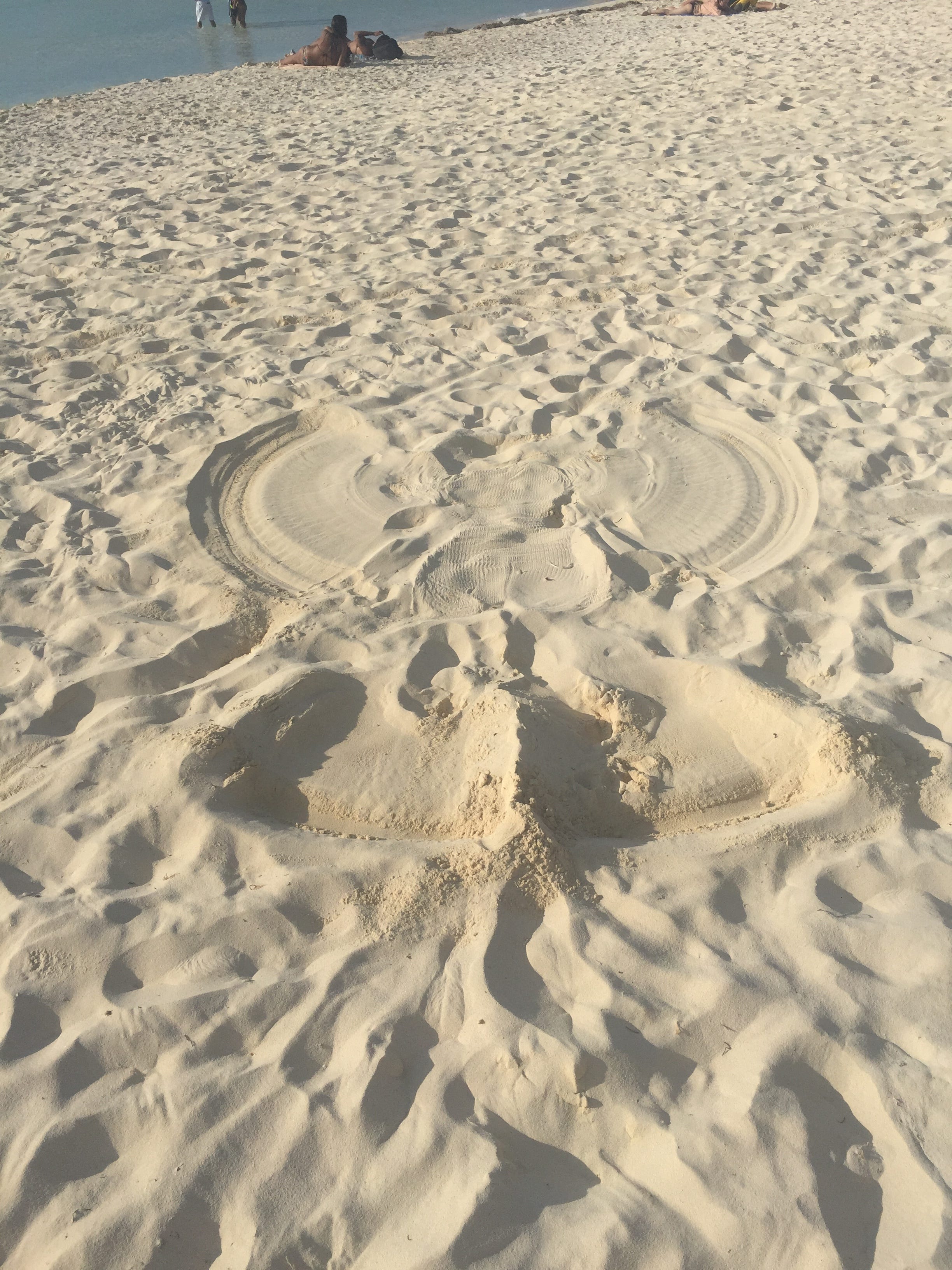
And maybe the reason stillness can feel so uncomfortable after a life of movement is that we’re finally integrating what we learned instead of chasing the next mirror. (I am talking to myself here, too!) Maybe staying put isn’t failure. Maybe it’s a pause long enough to ask what actually changed — and what hasn’t — before moving again.
Maybe staying still doesn’t mean you’re lost or stuck. Maybe it means you finally know where you are.
And look, everywhere you go, there you are. Home in yourself. Regardless of where that is.
Travel doesn’t always take you somewhere new.
Sometimes it brings you back—
to a version of yourself you didn’t understand the first time.
Until Next Time…